
10x50 vs. 15x70 Binoculars: Why Lower Magnification is Better for Handheld Stargazing
High magnification often ruins the view for beginners due to image shake, making the humble 10x50 a superior choice over bulky 15x70 models for hand-held observation.

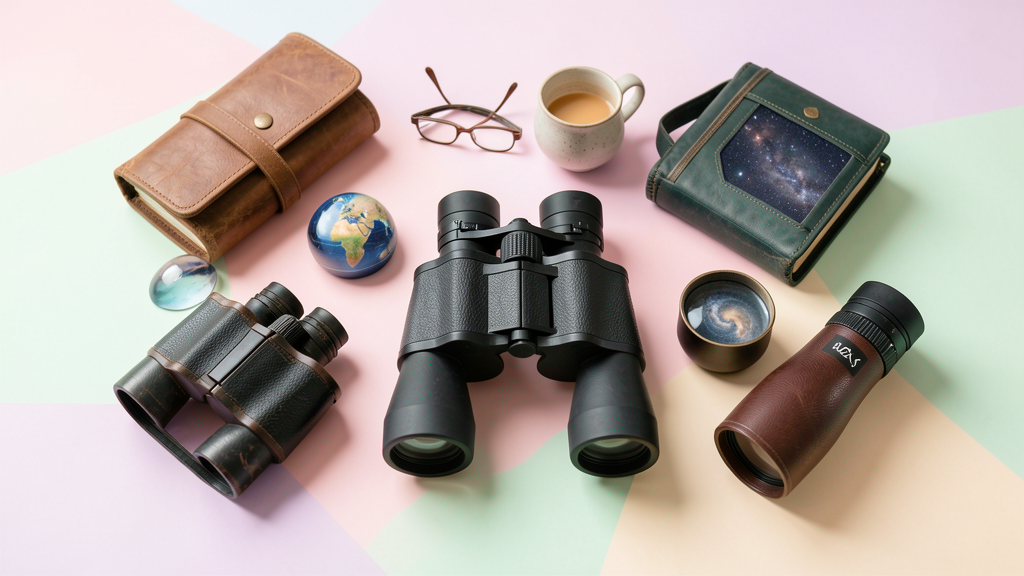
Walk into any outdoor store in 2026, and you will see the same pattern on the shelves. Newcomers to astronomy naturally gravitate toward the binoculars with the biggest numbers on the housing. A pair labeled "15x70" looks infinitely more powerful than a modest "10x50" sitting next to it. The logic feels sound: fifteen is better than ten, so the view must be better. This assumption is the single biggest mistake beginners make when buying their first piece of optical equipment. While the 15x70s gather more light, the physics of the human hand makes them nearly impossible to use without a tripod. When viewing stargazing tools for handheld use, the lower magnification of the 10x50 almost always wins.
The Hidden Cost of High Numbers
Magnification is a double-edged sword. It does not just bring the image closer; it amplifies every single micro-movement your body makes. Your heartbeat, the tension in your arm muscles, and even your breathing are all translated to the eyepiece. At 10x magnification, that tiny tremor in your hand is magnified ten times. Jump up to 15x, and that same tremor becomes 50% larger and significantly more violent.
Imagine trying to draw a straight line on a piece of paper while someone gently taps your elbow. At 10x, that tap is a minor jiggle. At 15x, the tap looks like an earthquake. For astronomy, where you are often standing still with your arms raised, holding 15x binoculars steady enough to resolve a crisp star field is an exercise in futility. The image dances around so much that your eyes constantly struggle to re-focus, leading to rapid fatigue and a headache within minutes.
Why 15x70s Are Basically Tripod-Only Gear
The problem with the 15x70 configuration is not just the 15x magnification; it is the weight required to support the 70mm objective lenses. A quality pair of 15x70s will often weigh over 1.5 kilograms (3.3 lbs). Holding that mass up to your eyes for more than thirty seconds is physically taxing. The heavier the binoculars, the faster your muscles tire, and the shakier the view becomes.
These instruments are fantastic light buckets. The 70mm aperture collects nearly twice as much light as a 50mm lens, which is excellent for faint galaxies or nebulae. However, that benefit is completely negated if the image is bouncing around like a rubber ball. I have watched countless beginners at star parties try to sweep the Milky Way with 15x70s. They see a blur, get frustrated, and put them down, assuming the problem is their eyes or the sky conditions. The reality is simply that they are using the wrong tool for the method. If you buy 15x70s, you are really committing to buying a heavy tripod and a fluid head, which adds cost, setup time, and complexity.
The Optical Stability of a 10x50
This brings us to the 10x50 format. It is the undisputed champion of handheld astronomy for a reason. Weighing typically around 800 to 900 grams, a 10x50 is light enough to hold for extended periods. More importantly, the 10x magnification is the upper limit of what can be steadied by human hands with practice.
Beyond stability, the 10x50 offers a wider field of view. While a 15x70 might show you a field of view around 4 degrees, a 10x50 typically offers 6 to 7 degrees. This might sound like a technicality, but in the sky, it is the difference between seeing the entire Pleiades cluster comfortably versus only seeing two or three of its stars at a time. Finding objects is significantly easier when you have a wider window to look through. You spend less time "hunting" for the target and more time observing it.
Consider the Andromeda Galaxy, M31. In a handheld 15x70, the galaxy will constantly drift in and out of your field of view due to the shake, and the narrow view makes it hard to anchor the galaxy against surrounding stars. In a 10x50, you can often fit the galaxy’s core and some of its extended disk in the same frame. The image is rock steady, allowing you to use a technique called "averted vision" to spot the faint dust lanes. You see less total light, perhaps, but the resolution of the detail you do see is vastly superior because the image is still.
When Should You Actually Upgrade?
The 15x70 is not a bad instrument; it is just a specialized one. If you are looking for a purely handheld experience that you can grab from the car, walk into a field, and use immediately, the 10x50 is the only logical choice in this comparison. It passes the beginner-friendliness test with flying colors: it is easy to carry, intuitive to aim, and forgiving of minor movements.
You should only consider the 15x70 if you are ready to treat your astronomy gear like a stationary setup. Once you accept that you need a mount, the 15x70 becomes a powerful observatory tool. But for those starting out in 2026, chasing that higher magnification number before you are ready to stabilize it will likely kill your enthusiasm faster than a cloudy night. The best views are the ones you can actually hold onto.