
Can You Actually See the Difference Between a Supermoon and a Regular Full Moon?
We break down the optical physics and perceptual psychology behind the supermoon hype to find out if your eyes are seeing a celestial giant or just media spin.
 Practical guides to astronomy and skywatching for curious beginners
astronomy and skywatching for curious beginners editorial hubJune 20, 2026
Guides, comparisons, and short explainers on astronomy and skywatching for curious beginners — written for readers who want to understand and decide, without filler.
Featured this week5
For your next decision.
We break down the optical physics and perceptual psychology behind the supermoon hype to find out if your eyes are seeing a celestial giant or just media spin.

Learn how to distinguish atmospheric distortion from satellites through a firsthand account of mistaking Venus’s crescent phase for a malfunctioning drone.

Decode the night sky by understanding how star color reveals surface temperature, using Orion’s famous giants as your guide.
More from Spacespiced.22

Discover the atmospheric physics behind light pollution and why city skylines dominate the night sky even when you are miles away from civilization.

Struggling to tell waxing from waning moons in the sky, I turned to a kitchen experiment that completely rewired how I visualize lunar phases.

Stop memorizing backward numbers and start using these five household comparisons to finally grasp how star brightness actually works.

A light-year isn't a duration you mark on a calendar, but a colossal unit of distance spanning nearly six trillion miles.

Stop blaming the elliptical orbit for your sunburn; the real reason for the seasons is a fixed 23.5-degree tilt that never changes.

Augmented reality astronomy apps promise an easy guide to the cosmos, but the cluttered interfaces often create a digital wall that obscures the very sky you’re trying to learn.

Stop chasing the Moon across a black sky; learn to align your finder scope using a distant terrestrial target in broad daylight for a frustration-free night.
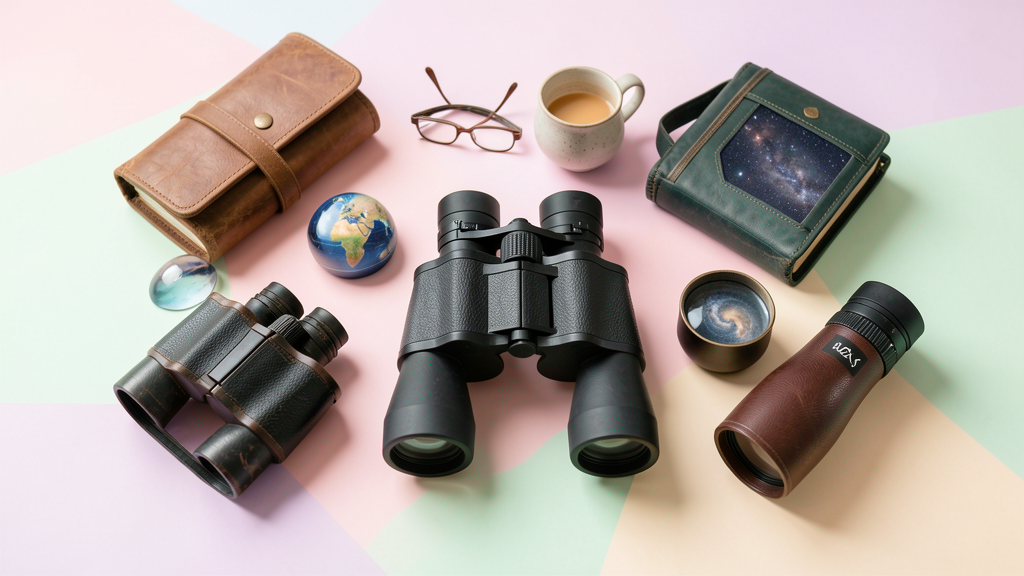
High magnification often ruins the view for beginners due to image shake, making the humble 10x50 a superior choice over bulky 15x70 models for hand-held observation.
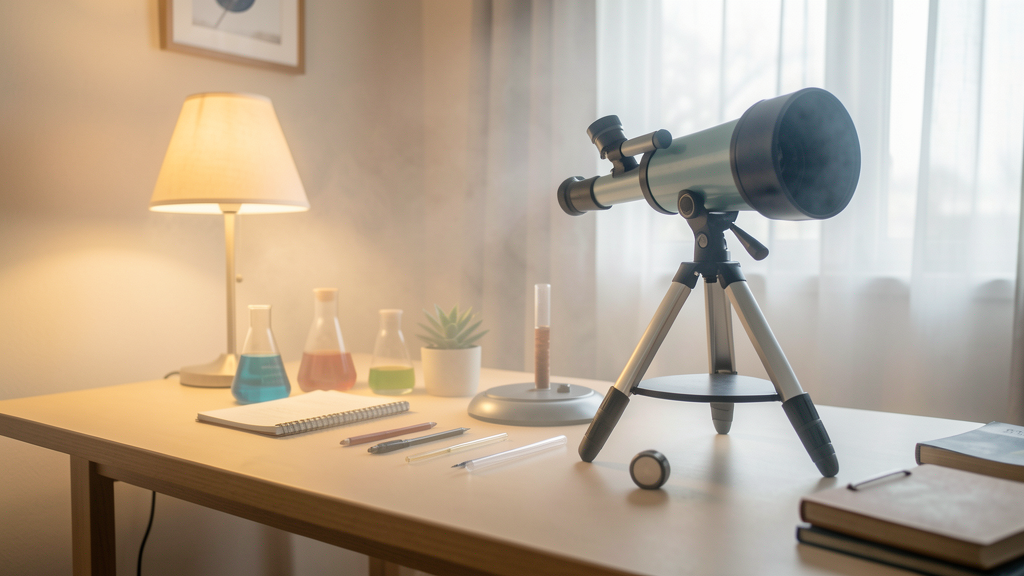
Discover why a cheap, high-magnification department store telescope failed to deliver views of the cosmos and which stable, beginner-friendly instrument replaced it.
Saving a few bucks on a red flashlight might cost you the best view of the Milky Way you'll get all year.

Stop checking the horoscopes and start checking the sky: discover why the Sun hasn't been in your 'sign' for nearly two thousand years.

Master the ancient skill of celestial orientation to locate true north in the darkest skies using only the Big Dipper and simple geometry.

Swapping your screen for a simple plastic star wheel forces your brain to engage, turning passive observation into active pattern recognition that lasts a lifetime.

Unlock the secrets of the winter sky by learning how Orion's Belt acts as a celestial pointer to Sirius, Aldebaran, and beyond, transforming a single pattern into a roadmap.

Decode the rapid orbital mechanics of the Galilean moons and learn a simple sketching technique to track their movement across the Jovian system.

Stop squinting at a blurry orange ball; here are the specific aperture, magnification, and optical quality specs required to resolve the famous gap in Saturn's rings.

Master the narrow 15-minute post-sunset window to locate Mercury using a precise scanning technique that bypasses the horizon glare.

Manage your expectations for the next opposition by understanding the physics behind why Mars remains a small, rusty orb in your eyepiece, and learn to love the subtle details you can actually spot.

A detailed account of how overcomplicating my setup caused me to miss a once-in-a-lifetime sky event, and the framework I use to choose gear wisely now.

Stop mourning the 2012 Venus transit and start planning for 2032—chasing the frequent, accessible Mercury events offers a far better return on your astronomical patience.

Deciding between naked-eye viewing and optical gear for the March 3, 2026, total lunar eclipse depends entirely on which specific color phases you prioritize.

Capture meteor showers without missing the show by using a hidden iPhone timer combination that eliminates shake and increases your odds of a stellar shot.