
Can You Actually See the Difference Between a Supermoon and a Regular Full Moon?
We break down the optical physics and perceptual psychology behind the supermoon hype to find out if your eyes are seeing a celestial giant or just media spin.

Every year, as the calendar pages flip toward the dates of the "supermoons," my inbox floods with the same question. Beginners and seasoned skywatchers alike want to know if the hype is real. The media splashes headlines about a "massive" moon dominating the sky, promising a spectacle that feels almost apocalyptic in scale. But when you walk outside and look up, the reality often feels... subtle.
I have spent years testing gear and observing lunar cycles, often finding myself frustrated by the gap between expectation and reality. To understand if a supermoon is genuinely visually distinct from an average full moon, we have to strip away the Instagram filters and the long-exposure photography. We need to rely on the raw data of optics and human perception.
The Mathematics of "Super"
The term "supermoon" is not an astronomical strict term; it was coined by an astrologer, not an astronomer, but it refers to a real physical phenomenon: a perigean full moon. This occurs when the moon is at or near its closest approach to Earth (perigee) while also being in the full phase.
The moon’s orbit around our planet is not a perfect circle. It is an ellipse, meaning the distance varies. At its closest (perigee), the moon sits roughly 363,300 kilometers away. At its farthest (apogee), it is about 405,500 kilometers distant. That is a difference of roughly 42,000 kilometers.
When a full moon coincides with perigee, it appears about 14% larger in diameter than it does when it is full at apogee (a "micromoon"). It also shines about 30% brighter.
Fourteen percent does not sound like a lot on paper. In the world of telescopes, a 14% increase in aperture is noticeable but not revolutionary. However, human vision is tricky. We are excellent at detecting relative differences, but terrible at absolute measurements. If you could magically snap your fingers and have a regular full moon instantly swap places with a supermoon in the exact same spot in the sky, you might notice the change, likely exclaiming that it looks "punchier" or closer. But we don't have that luxury. We see the moon in isolation, separated by 29.5 days from the last full moon.
The Moon Illusion is the Real Culprit
Most of the time, when people think they are seeing a gigantic supermoon, they are actually falling victim to the Moon Illusion. This is a well-documented optical trick where the moon looks massive when it is rising or setting near the horizon, yet appears small when it is high overhead.
The illusion happens because our brains interpret the sky as a flattened dome rather than a true sphere. When the moon is near the horizon, we compare it to foreground objects like trees, houses, and skyscrapers. Our brain understands that those objects are big, so if the moon looks comparable in size, our logic centers conclude the moon must be colossal. When the moon is high in the void of space, surrounded by nothing but black emptiness, our brains lack a reference frame, and it retreats to its "default" small size.
Crucially, this effect happens with every full moon, not just supermoons. A regular full moon rising behind a distant mountain range will look just as imposing as a supermoon, provided the atmospheric conditions are clear. The media hype conflates the Moon Illusion with the supermoon phenomenon, leading to disappointment when the moon climbs higher and shrinks back to "normal."
Why Your Memory Betrays You
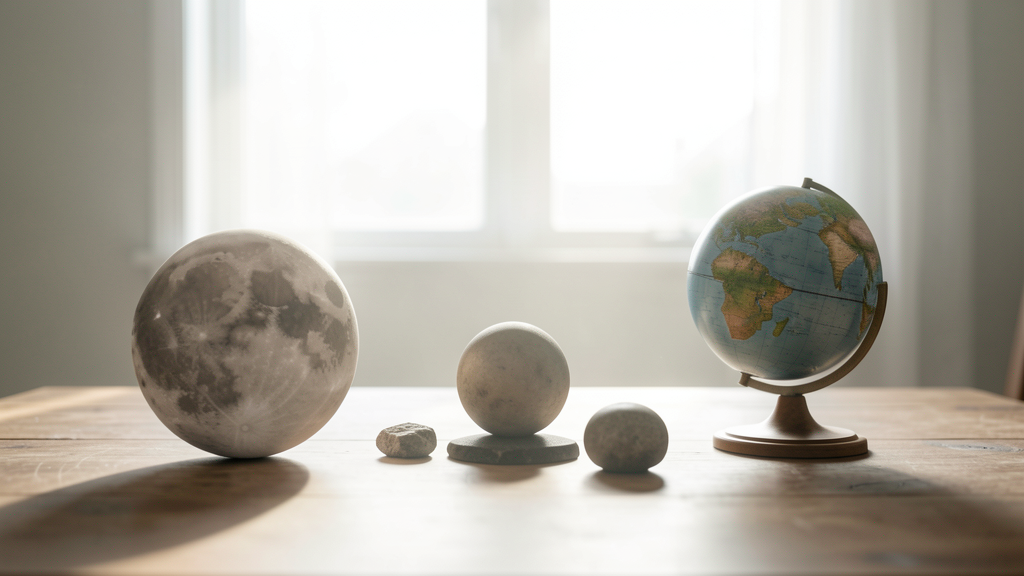
The biggest obstacle to noticing the supermoon is your own memory. Human visual memory is surprisingly poor for specific details like size and brightness. Try this experiment: look at a full moon tonight. Make a mental note of exactly how large it is and how bright the craters appear. Then, wait 28 days and look at the next one. I guarantee you will not be able to recall the previous one with enough fidelity to make a precise comparison.
Without a side-by-side comparison, our brains fill in the gaps. If you are told the moon is going to be "the biggest of the year," your brain primes itself to see something bigger. Confirmation bias does the rest. You look at the moon, and because you expect it to be large, it satisfies that expectation.
I recall a specific instance back in 2026 when the "Buck Supermoon" was rising. I set up a modest How I Missed the Great Conjunction by Trying Too Hard with a Telescope beginner refractor on my deck, expecting to be blown away. I watched it crest the treeline. It was beautiful. It was bright. But was it visibly larger than the full moon I had seen the previous month? Honestly, no. Without a ruler taped to my eyepiece, I couldn't tell.
The One Metric That Actually Changes
While the size increase is difficult to perceive, the brightness is a different story. A 30% surge in illumination is significant to the dark-adapted human eye. A supermoon doesn't just look bigger; it looks washed out.
If you are using binoculars or a telescope, a regular full moon is already so bright that it can be uncomfortable to view at high magnification. You often need a neutral density filter to cut the glare and see the surface details without squinting. During a supermoon, this glare is intensified. The contrast between the bright highlands and the dark maria (the lunar seas) actually decreases slightly because of the sheer intensity of the light reflecting back at you.
For naked-eye observers, the effect of a supermoon is best described as "ambient." You might notice that the night doesn't get as dark as usual. If you live in an area with light pollution, the supermoon adds to the skyglow, washing out fainter stars and making the Milky Way invisible. It acts more like a giant streetlamp than a subtle celestial object.
If you are trying to spot subtle celestial details, like the color shifts during a 5 Specific Color Shifts to Watch For During the Next Total Lunar Eclipse, the overpowering brightness of a supermoon can actually be a nuisance. But if you are just enjoying a night walk, you will likely find you can see your shadow clearly on the ground.
The Gear Bench Test
To verify my own skepticism, I decided to treat the 2026 supermoon season like a piece of gear review. I wanted to remove the subjectivity. I set up a camera on a fixed tripod, locked the settings, and photographed the moon at apogee (farthest away) and perigee (closest).
In the photos, the difference is undeniable. The supermoon takes up more pixels. When I overlay the images, the edge of the supermoon extends visibly beyond the edge of the micromoon.
However, a camera does not see the way we do. A camera captures a frozen moment, allows us to zoom in, and lets us compare two images side-by-side on a screen. Our eyes do not have a "zoom" function, and our memory does not have a "compare" button. The camera proves the physics is real, but it also proves that the human eye is not sensitive enough to detect that 14% variance without technological aid.
For a beginner wondering if they should buy a specific telescope to see a supermoon, my advice is simple: don't buy gear just for this event. The moon is the easiest target in the sky for any optical instrument. A supermoon fills the eyepiece just as a regular moon does, perhaps with a slightly tighter edge focus, but the experience is functionally identical. You are better off investing in a good pair of 10x50 binoculars, which are versatile enough for star clusters and daytime birding, rather than chasing the "super" size difference.
How to Actually Enjoy the Event
If you go outside looking for a moon the size of a Ferris wheel, you will be disappointed. But if you adjust your expectations, the supermoon offers a unique opportunity. Because the moon is closer, its gravitational pull is slightly stronger, leading to higher and lower tides—king tides. If you live near the coast, watching the tide rush in is a tangible way to "feel" the supermoon.
Furthermore, the lighting geometry during a supermoon can be dramatic. Because the moon is brighter, the shadows cast by objects on Earth are sharper. I once stood in a field during a supermoon evening and watched my shadow stretch across the grass, detailed enough to see the bob of my head as I walked. It was eerie and peaceful.
Try to catch the moonrise. This is when the combination of the Moon Illusion and the actual perigee distance work together. It provides the best "bang for your buck" visually. Check your local moonrise time precisely. The moment the top limb clears the horizon is when it looks most impressive. If you want to attempt a photo, use a long lens (200mm+) to compress the scene against a foreground building or tree. This is how those viral viral photos are taken. Just How to Photograph a Meteor Shower Using Just Your iPhone Timer teaches you to leverage limitations, photographing a supermoon requires understanding perspective. Your phone will likely just show a bright dot unless you use the telephoto lens or manual exposure settings.
The Verdict on Visual Impact
So, can you actually see the difference? The honest answer is: barely, and only if you know exactly what to look for.
The size difference of 14% sits right on the threshold of human perception. You might notice the moon looks "fuller" or more imposing, but you won't mistake it for a completely different object. The brightness, however, is a giveaway. The supermoon acts as a powerful spotlight, capable of lighting up the landscape and drowning out faint stars.
If you miss this one, don't worry. The moon will be full again next month, and it will be only 12% smaller. You won't notice the loss. The hype cycle is driven by a desire for a "special" event in a routine world, but the sky is special regardless of the moon's distance.
Go outside. Look up. Enjoy the wash of silver light. But don't beat yourself up if you look at it and think, "well, that looks like the moon." Because that is exactly what it is.
Read next
The Gear Trap: How I Missed the Great Conjunction by Trying Too Hard
A detailed account of how overcomplicating my setup caused me to miss a once-in-a-lifetime sky event, and the framework I use to choose gear wisely now.

Stop Tapping at the Sky: How to Photograph a Meteor Shower Using Just Your iPhone Timer
Capture meteor showers without missing the show by using a hidden iPhone timer combination that eliminates shake and increases your odds of a stellar shot.