
Why Did I Return My $200 Department Store Telescope?
Discover why a cheap, high-magnification department store telescope failed to deliver views of the cosmos and which stable, beginner-friendly instrument replaced it.

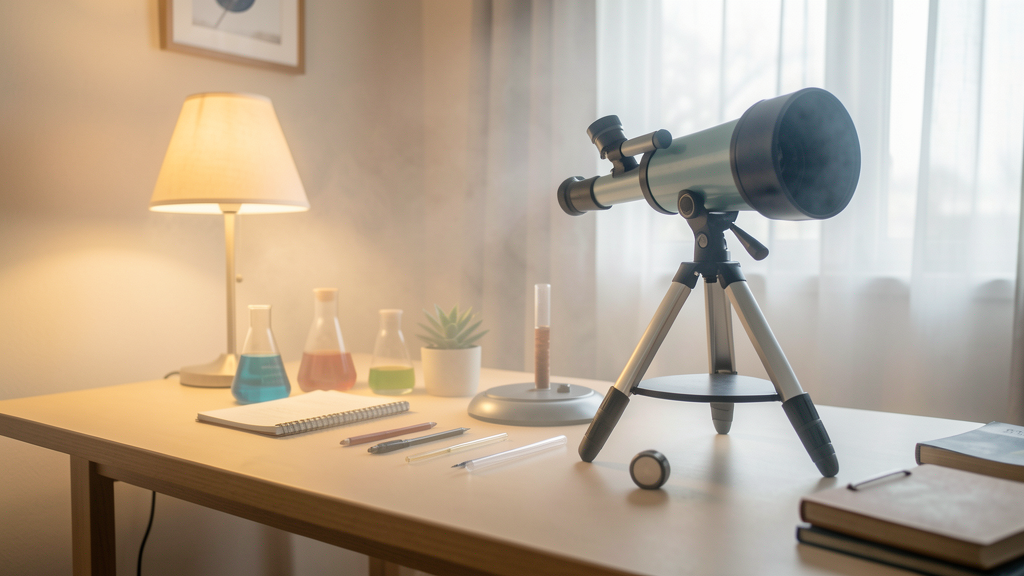
Two weeks ago, I stood in the middle of a big-box electronics aisle, staring at a colorful box adorned with high-resolution photos of Saturn and the Orion Nebula. The price tag read $199.99. As the Gear & Equipment Editor for Spacespiced, I know better, but I wanted to understand the exact struggle a curious beginner faces in 2026. I bought the "AstroView 900EQ"—a 70mm refractor on an equatorial mount—to see exactly what two hundred dollars gets you when you shop based on box art rather than optical physics.
I returned it three days later, frustrated not by the sky, but by the tool that promised to reveal it. The issue was not that I couldn't find objects; it was that the moment I found them, the instrument itself fought to keep them in view. If you are currently holding a similar box or browsing online retailers for a "first telescope," you need to understand why the specifications on the label are often the very things that will ruin your experience.
The Tripod Mount: Where Physics Went Wrong
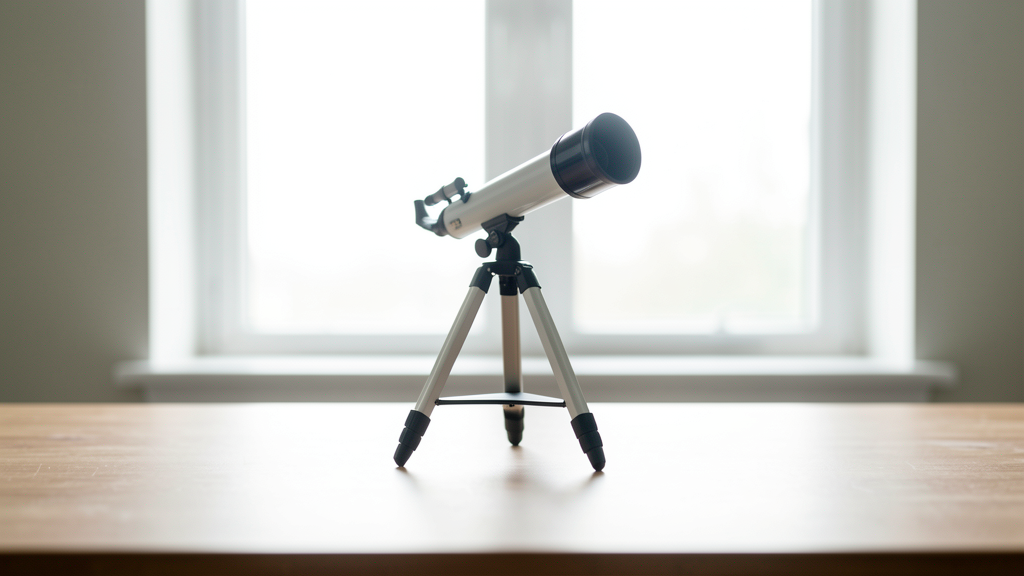
The most immediate failure point of the AstroView 900EQ was the mount. The box boasted of an "Equatorial Mount with Slow-Motion Cables," a term that sounds technical and precise. In reality, this was a lightweight aluminum tripod paired with a casting so soft that the metal flexed under the weight of the optical tube.
Assembly took forty minutes, not because the process was complex, but because the bolts provided were barely long enough to catch the threads in the soft metal legs. Once erected, the tripod stood about five feet tall. Every time I touched the focuser knob to sharpen the image of the Moon, the entire tube vibrated violently. I timed it; the shake took six seconds to settle down. At high magnification, six seconds feels like an eternity. A slight breeze would push the target entirely out of the field of view.
For a beginner, this is fatal. You spend ten minutes hunting for a faint smudge of light, and just as you get it centered, the wind blows, or you breathe too hard, and it's gone. The "slow-motion cables" were supposed to help tracking, but the gears were so sloppy that moving the cable left caused the image to jerk right before settling. I spent more time fighting the mechanics than actually looking at photons. This is the dirty secret of the $200 range: manufacturers put 80% of the production budget into the lens tube and marketing, leaving the mount—which is arguably more important—as a shaky afterthought.
The Dangerous Promise of Maximum Power
If the shaky mount was the heart attack, the magnification claims were the cancer. The side of the box screamed "675x Magnification!" in bold yellow letters. This is a lie that relies on the beginner not understanding the physics of light. A 70mm aperture lens, no matter how perfect the glass, has a theoretical maximum useful magnification of about 140x. Anything beyond that results in a dim, fuzzy, "mushy" image that is impossible to focus.
Included in the box were two eyepieces: a 25mm and a 4mm. The 25mm provided a passable 28x view, though the lens coatings were cheap and caused glare around bright stars. The 4mm eyepiece, however, was intended to push the scope to its supposed "limit." I tried to view Jupiter with this eyepiece. The planet was a blurry, swimming blob that immediately exited the field of view the moment it touched the edge of the eyepiece.
Manufacturers include these useless high-power eyepieces because they sell telescopes based on numbers. Beginners think "higher number equals better view," just like megapixels in cameras. The reality is the opposite. In astronomy, lower magnification often yields sharper, brighter images because it is easier to keep the target steady and the exit pupil is more comfortable for the human eye. If you want to understand why less is often more regarding power, compare this to binocular selection; lower magnification is often better for handheld stability, and the same principle applies to telescopes on cheap mounts.
Switching to a Tabletop Dobsonian
I packed the AstroView back in its box, drove back to the store, and exchanged it. I didn't spend triple the amount; I spent the same $200, but I switched categories entirely. I walked out with a 5-inch Tabletop Dobsonian.
The difference was night and day. A Dobsonian is a Newtonian reflector on a simple alt-azimuth base that sits low to the ground. It has no tripod legs to wobble and no cheap equatorial gears to strip. The entire assembly took less than five minutes. I placed the wooden base on a sturdy picnic table in my backyard.
The optical specification tells the real story. While the department store scope had a 70mm aperture (2.7 inches), this tabletop model has a 130mm aperture (5.1 inches). Aperture is king. It determines how much light the scope gathers. The 5-inch scope gathers over three times the light of the 70mm refractor.
I pointed it at the Hercules Globular Cluster (M13). Through the department store scope, it looked like a faint, fuzzy star. Through the Dobsonian, it resolved into a sparkling ball of distinct diamond dust. The view wasn't shaking. The base was heavy and rotated smoothly on Teflon bearings. If I nudged it, it stayed put. The only eyepieces I used were a 25mm and a 10mm—perfectly reasonable powers that the optics could actually handle.
Stability Trumps Features Every Time
The "feature set" of the returned telescope looked better on paper. It had a tripod, an equatorial mount (ostensibly for tracking stars), and a finder scope that looked like a tiny telescope. The Dobsonian I bought instead looked "primitive." It's just a tube sitting on a box. However, the primitive design works because it is rigid.
With the department store model, the finder scope was a nightmare. It was a 5x24 finder, essentially a toy. Aligning the finder with the main tube required loosening tiny screws that would shift again the moment I touched them. The Dobsonian came with a simple "red dot" finder. I looked through a glass window, put the red dot on the star, and looked in the eyepiece. The object was there.
This highlights the core problem with mass-market gear: they add complexity to disguise the lack of quality. A beginner does not need a motor drive or a German equatorial mount for their first telescope. They need a rock-solid platform that points where they want and stays there. If you are fighting the gear to find Saturn, you are not learning the sky; you are learning to hate the hobby.
Seeing Through the Atmosphere
Even with the stable Dobsonian, I quickly learned that the telescope is only half the battle. One clear evening, I set up to view Mars, but the image was boiling and blurry. I assumed the optics were bad, but I checked the weather report and realized the "seeing" conditions were poor due to upper atmospheric turbulence.
It is crucial to understand that good transparency differs from good seeing. Transparency is about clarity and lack of clouds, which lets you see faint deep-sky objects. Seeing is about atmospheric stability, which is required for high-magnification planetary viewing. With my old shaky scope, I never would have known the difference. I would have assumed the blur was the mount or the cheap eyepieces. With a quality instrument, you can diagnose the sky itself. You know that if the image is steady but dim, it's a transparency issue. If it's bright but boiling, it's a seeing issue.
The Real Cost of "Cheap" Astronomy
Returning that $200 telescope was the best educational move I made this year. The department store model was not a bargain; it was a barrier to entry. It creates a false expectation that astronomy is about straining your neck to look through a shaky tube at blurry blobs of light.
The replacement Dobsonian proved that you don't need to spend a fortune to see incredible sights, but you must spend your money on physics rather than marketing. Aperture and stability are the only metrics that genuinely matter for a beginner. When you buy a telescope that violates the "beginner-friendliness" check on assembly and maintenance, you aren't just wasting money; you are risking your enthusiasm for the hobby.
If you are looking at a telescope in a store and the box boasts about magnification, walk away. If it boasts about aperture and has a base that looks like a piece of furniture, take it to the register. The universe doesn't require fancy gears or plastic tripods to be seen; it just requires a steady window.
Read next
10x50 vs. 15x70 Binoculars: Why Lower Magnification is Better for Handheld Stargazing
High magnification often ruins the view for beginners due to image shake, making the humble 10x50 a superior choice over bulky 15x70 models for hand-held observation.

The Twinkling Trap: Why a Clear Night Can Be Bad for Planets
Stop blaming your gear. Learn why the star-filled nights you love might actually be the worst time to zoom in on Mars or Jupiter.