
4 Reasons Why a Cheap Red Flashlight Will Ruin Your Night Vision
Saving a few bucks on a red flashlight might cost you the best view of the Milky Way you'll get all year.

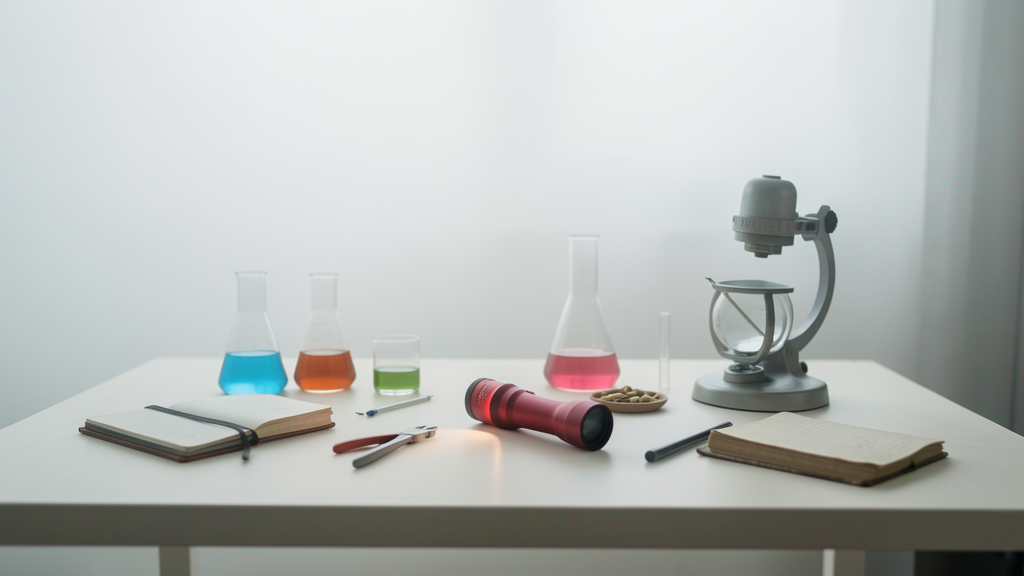
Every amateur astronomer has been there. You drive forty minutes out of town to escape the city glow, set up your gear, and wait patiently for the sky to darken. After about thirty minutes, the Orion Nebula starts to pop against the inky black background. You reach for your flashlight to check your star atlas or swap an eyepiece filter, click the button, and—flash. In a split second of clumsy panic, you blast your face with light. You look back up, and the nebula is gone. The sky looks gray and washed out. You just reset your biological clock back to zero.
Most beginners assume any red light is safe. They buy a $5 keychain light or a multi-tool from a bargain bin because the packaging screams "astronomy ready." I have tested dozens of these budget options over the years, and I am here to tell you that most of them are lying to you. They are often repurposed camping lights with a cheap red filter slapped on the front, or they utilize low-grade LEDs that bleed into the white spectrum.
Buying a dedicated astronomy flashlight is not about being a gear snob. It is about protecting the physiological process that allows you to see the universe. Just like that $200 department store telescope I returned because it was fundamentally flawed, a cheap red flashlight is often fundamentally flawed for its intended purpose. Here are four reasons why your "emergency" light is ruining your night vision.
The "Red Filter" Fallacy and Spectrum Bleed
The most common issue with budget red flashlights is how they achieve the color. In high-quality optics, we look for specific glass elements or purpose-built LEDs that emit light at a narrow wavelength, usually around 620 to 650 nanometers. Cheap manufacturers skip the expensive engineering. Instead, they take a standard white LED—which is heavy in blue and green light—and paint a red lens cap over it.
This paint is rarely dense enough to block the shorter wavelengths effectively. While the beam looks red to your naked eye, if you were to hold it up to a spectrometer, you would see a massive spike in the blue and green zones. Your eyes are incredibly sensitive to these colors. The rod cells in your retina, which are responsible for low-light vision, do not detect red light well, but they are hammered by blue and green spectrum leaks.
When you use a filtered white light, you are essentially diluting the protection. You might think you are being safe, but your eyes are actively fighting against the "pollution" leaking through the cheap dye. The result is a slow erosion of your dark adaptation rather than an instant blast, which is arguably more insidious because you don't realize you are losing sensitivity until faint stars simply disappear from view.
Why 620nm Is Not the Same as 650nm
Even if a flashlight manages to block the white light bleed, not all red is created equal. Human physiology dictates how we perceive light in low conditions. Our eyes are most sensitive to greenish-blue light (peak sensitivity around 507nm for scotopic vision). As we move toward the red end of the spectrum, our sensitivity drops off dramatically. However, many cheap red LEDs sit right on the border of orange-red—closer to the 600nm mark—because those LEDs are cheaper to mass-produce for automotive brake lights and cheap toys.
At 600nm to 620nm, the light is still bright enough to stimulate your cone cells (color vision) and can even trigger a mild response in your rods if the intensity is high enough. True astronomical safety requires a deep red, ideally 650nm or deeper. At this wavelength, the light is effectively invisible to the rod cells; it simply cannot register the photon, no matter how bright it gets.
Cheap flashlights lack this specificity. They produce a pinkish, salmon-colored glow that feels surprisingly glaring in the dark. It illuminates the immediate area too harshly, causing your pupil to constrict. When your pupil shrinks, you reduce the amount of light entering your eye, defeating the purpose of dark adaptation entirely. A proper deep-red light allows your pupil to stay wide open while you read your charts.
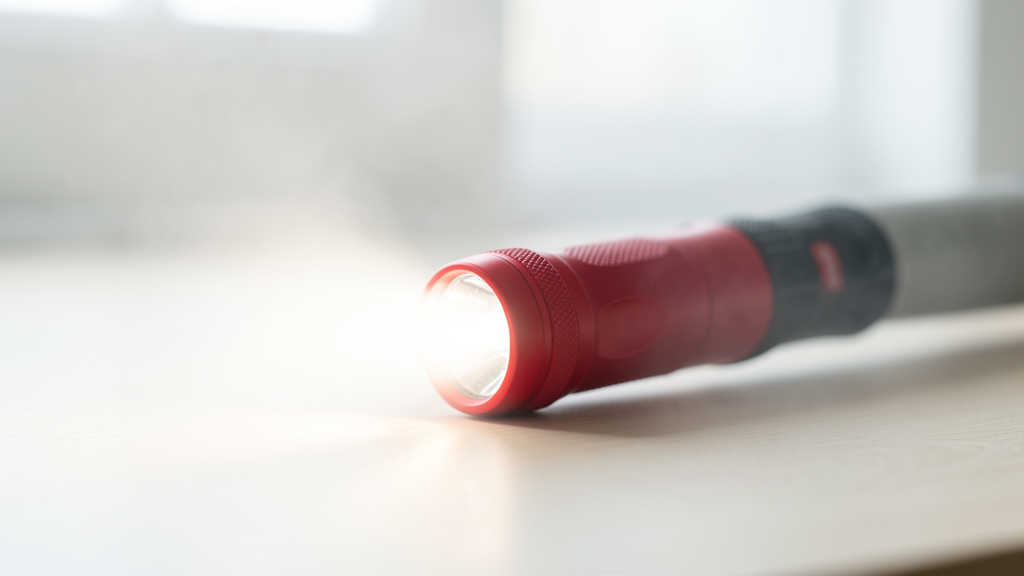
The Engineering Failure of Cheap Dimming Mechanisms
Variable brightness is not a luxury; it is a necessity for stargazing. When you are fully dark-adapted, even a low-power red light can feel like a spotlight. Conversely, when you arrive at a site during twilight or are packing up your car, you need a brighter setting to navigate safely.
Expensive astronomy lights use proper circuitry with Pulse Width Modulation (PWM) to lower the brightness without altering the color temperature. They maintain that deep red hue even at 5% power. Cheap flashlights, however, almost always rely on a physical twist mechanism or a simple resistor that changes the voltage.
The problem with these physical dimmers on cheap units is twofold. First, the voltage drop often shifts the color of the LED. As you dim a cheap red light, it frequently drifts toward an orange or brown hue, reducing its safety for your night vision. Second, the "dim" setting is often useless. I have reviewed generic keychain lights where the difference between "low" and "high" was imperceptible, or worse, the "low" setting flickered annoyingly due to poor contact.
Fumbling with a twisty cap in the freezing cold while wearing gloves is a recipe for disaster. You inevitably twist it too far, turning the light off, or too little, blinding yourself. If you are trying to align your telescope's finder scope during the day or simply checking your tripod legs, this inconsistency is annoying. When you are hunting for a faint fuzzy in the eyepiece, it is a dealbreaker.
Interface Nightmares: From Accidental Strobes to Dead Batteries
The final nail in the coffin for budget red lights is the user interface (UI). In the quest to be "multi-functional," cheap manufacturers load these lights with modes nobody needs at a star party: SOS signals, aggressive strobe functions, and high-beam white modes.
These modes are usually controlled by a single button click sequence. Imagine the scene: you are enjoying a quiet meteor shower, you reach for your light to check the time, and you hold the button a fraction of a second too long. Suddenly, your flashlight is flashing a blinding strobe pattern that lights up the entire campsite like a disco. You are now the most hated person at the dark sky site.
Furthermore, these generic electronics lack efficient power management. A high-quality astronomy light can run for dozens of hours on a single set of batteries because it drives the LED at a lower, efficient current. Cheap lights often drive the LED with excess voltage to appear brighter on the packaging, draining a set of AAs in a single evening. I have had nights cut short because my $5 "bargain" light died right as the Andromeda Galaxy rose high enough to observe, leaving me scrambling to find a backup in the dark.
Moving Beyond the "Emergency Only" Mindset
The transition from a casual observer to a dedicated skywatcher involves respecting the darkness. It is tempting to rely on the tools you have lying around the house, but light management is a discipline. A reliable red flashlight is the first piece of equipment you should buy, even before you upgrade from binoculars to a telescope.
If you must use a cheap light, test it at home first. Shine it at a white wall in a pitch-black room. If you see any hint of orange, pink, or white halo, or if the light makes you squint, it is not safe for observing. Instead, consider investing a small amount more in a purpose-built variable brightness light from a reputable astronomy brand. Your eyes—and everyone else's at the star party—will thank you for the deeper, darker view of the cosmos.
Read next
Why Did I Return My $200 Department Store Telescope?
Discover why a cheap, high-magnification department store telescope failed to deliver views of the cosmos and which stable, beginner-friendly instrument replaced it.

How to Align Your Telescope’s Finder Scope in 3 Minutes During the Day
Stop chasing the Moon across a black sky; learn to align your finder scope using a distant terrestrial target in broad daylight for a frustration-free night.